Recognising the transition early
As advanced manufacturing, automation, digitalisation and smart technologies began to reshape industrial competitiveness, companies and public institutions needed to understand what the transition meant in practice.
International organisations possessed relevant expertise, while Malaysian stakeholders had ambitions for industrial upgrading. The challenge was to connect those capabilities with local business needs and public-sector priorities in a way that could support more than a one-off exchange.
TAPiO recognised the opportunity early and helped bring international technology and industrial specialists into engagement with Malaysian businesses and institutions.
Creating meaningful industry engagement
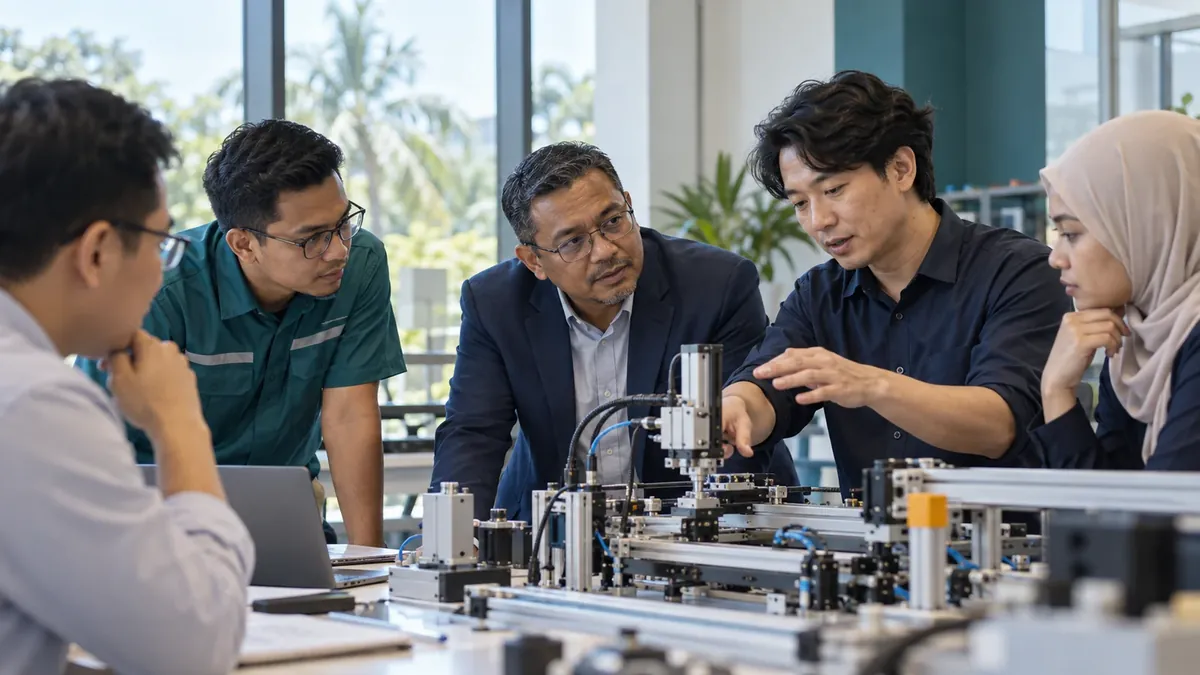
Working with a national investment institution and regional stakeholders, TAPiO helped develop and facilitate a three-location industry workshop programme. More than 600 participants attended across the programme, including manufacturers, SMEs, public-sector representatives, investment organisations and international specialists.
The discussions addressed practical questions around productivity, automation, digitalisation and industrial capability. They created an opportunity to understand industry needs and bring international expertise into direct conversation with local priorities.
The workshops were the starting point, not the principal outcome. Their value was in creating shared understanding, identifying relevant needs and establishing relationships that could support more sustained cooperation.
From a technology agenda to a lasting capability platform
- Emerging technology
- International expertise
- Industry mobilisation
- Institutional alignment
- Capability platform
Moving from dialogue to institutional alignment
As the engagement developed, the question shifted from introducing emerging technologies to establishing a continuing capability for adopting them. TAPiO helped facilitate discussions between Malaysian public-sector economic-development stakeholders and an international technical organisation around a dedicated platform for technology and knowledge transfer.
This required more than complementary technical interests. The organisations had different mandates, governance processes, commercial expectations and approaches to decision-making. A credible partnership needed those differences to be understood and translated into a workable shared proposition.
TAPiO helped maintain continuity between the initial engagement and the institutional discussions that followed. The emphasis was on connecting the opportunity with each party’s responsibilities and expectations, rather than treating an introduction as the end of the assignment.
Acting as a cultural and institutional bridge
International partners needed to understand how Malaysian public institutions assess economic value and progress decisions. Malaysian stakeholders needed a clear understanding of the international organisation’s capabilities, constraints and expectations for implementation.
TAPiO worked between these environments, helping translate institutional and commercial priorities, facilitate communication and support alignment around longer-term objectives.
Professional relationships helped bring the relevant parties into discussion. The substance of the work was developing mutual understanding and continuity, not claiming influence over public-sector decisions or bypassing the responsibilities of the institutions involved.
What changed
The initial delegation and workshop programme helped create the basis for a longer-term institutional public-private capability platform. Its purpose extended beyond awareness into technology transfer, industrial digitalisation, automation, technical training, process optimisation and innovation support.
The platform was connected to an international technical network of more than 1,000 specialists. This was the platform’s external knowledge network, not TAPiO’s staff or a claim that TAPiO directly managed those specialists.
The resulting arrangement provided a continuing channel for knowledge and capability development rather than relying solely on isolated visits. It was an institutional partnership for technology transfer and industrial transformation.
Later industry and talent initiatives belonged to the participating institutions. They are not presented as TAPiO-delivered programmes, but as evidence that the platform developed activity beyond the original engagement.
What this demonstrates
For technology businesses and international institutions, the case demonstrates the importance of translating expertise into local relevance and building the relationships needed for sustained cooperation.
For public-sector organisations, it demonstrates how international capabilities can be connected with industry needs and economic-development priorities. TAPiO’s contribution lay in recognising the opportunity, mobilising stakeholders and bridging commercial, cultural and institutional differences as engagement progressed towards a lasting capability.